






The loop
This is Tiny Fishing unblocked: the game loads straight from tinyfishing.io in your browser, so you can play Tiny Fishing online free on a school Chromebook, a laptop or a phone with no download and no sign-up.
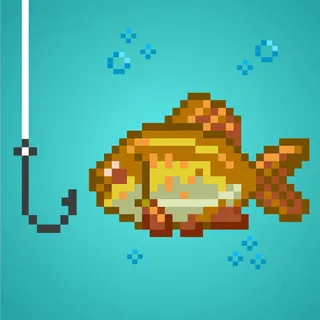
Cast. Steer the hook down through whatever is swimming past. When the line fills — or the rod runs out of depth — it comes back up, catching on the way. Sell the haul, buy one upgrade, cast again. That is the whole game, and it is the same on cast one and cast four hundred.
What changes is the exchange rate. Three upgrades compete for every coin: Depth decides how far the hook can sink, Max Catch decides how many fish the line holds, and Value multiplies what each one sells for. They are not equal, and the order you buy them in is the difference between a run that stalls at the second shelf and one that reaches the bottom.
Buy depth first. Always.
A species living one shelf deeper is worth several times a surface fish. Value multiplies whatever you are already catching, so buying it early multiplies the wrong fish — it feels like progress and it is the commonest way a run flattens out. Depth unlocks the fish; Value is how you cash them.
Max Catch is the one that has to keep pace rather than lead. If the line fills halfway down, the rest of the descent is wasted and you have paid for depth you cannot use. A useful rule: buy Depth until the line starts filling early, then buy Max Catch until it stops, then go back to Depth.
What a cast is actually worth
| Upgrade | What it changes | When to buy it |
|---|---|---|
| Depth | How far the hook sinks, and which species are reachable | First, and again whenever the line is not filling early |
| Max Catch | How many fish hang on the line at once | The moment the hook fills before it reaches the bottom |
| Value | Sale price per fish | Last — it is worth most once the deep species are in range |
Steering, which is half the game
The hook falls at a fixed speed and you move it sideways with the mouse. Small side-to-side sweeps through a dense shoal collect far more than sprinting after one large fish, because the hook catches on contact rather than on aim.
The return trip counts too. Most people let go of the mouse the moment the hook turns around, and the way up is where the easiest fish in the run are — they have already gathered around the line.
Where runs stall
- Value bought early. It multiplies the fish you are trying to stop catching.
- Depth far ahead of Max Catch. A full line at half depth means the deep water was paid for and never fished.
- Chasing single big fish. One rare fish is worth less than the six ordinary ones you swam past to reach it.
- Not steering on the way up. Half the catch window is spent doing nothing.
Frequently asked questions
Is Tiny Fishing unblocked at school?
Tiny Fishing runs in an ordinary browser tab from tinyfishing.io, with nothing to download or install, so it plays on most school Chromebooks and work computers. If a network filter blocks the site, only that network's administrator can change it.
Is Tiny Fishing free to play here?
Yes. The game runs in the page, costs nothing and needs no account. Press play and you are casting within a couple of seconds.
What are the controls?
The mouse, and nothing else. Click once to cast, then move the mouse left and right to steer the hook as it sinks and again as it rises. On a touchscreen, tap to cast and drag to steer.
How do I catch more fish per cast?
Upgrade Max Catch. It sets how many fish can hang on the line at once — the hook stops collecting the moment it is full, so an under-levelled line wastes the depth you paid for.
Which upgrade should I buy first?
Depth, then Max Catch, then Value. Depth is what unlocks new species, and a deeper species is worth several times a shallow one — so buying Value early multiplies the wrong fish.
What is the last fish in Tiny Fishing?
A small golden fish with blue stripes, found at the very bottom of the deepest water. Landing it awards a gold hook and 500 coins.
Does progress save?
Coins and upgrades are stored in your own browser. They survive closing the tab, but they do not travel between devices, and clearing site data resets the run.
Who made Tiny Fishing?
Madbox, the French studio behind Stickman Hook and a run of other one-thumb arcade games. It reached the browser through Coolmath Games and Poki.